
How a handful of generalists became a 58-person internal agency that ran on clear intake, visible work, and regular reporting.
Title: Art Director / Studio Manager, Communications Leadership Team
Organization: ION Group | Impact (ION's internal communications agency)
Timeframe: Nov 2020 to Sept 2023
Scope: 6 disciplines, 58 people, serving business units across the group
The situation
Impact started as a small team of generalists handling design, copy, website upkeep, and Office template formatting, with outside agencies brought in for large projects. The business was investing in it heavily and it was about to grow fast. Requests arrived by email, chat, and hallway asks. Work was easy to lose, priorities went to whoever asked loudest, and nobody could say how many requests the team handled. The problem to solve was not more capacity. It was giving a growing agency a way to receive work, route it, and report on it.
My role
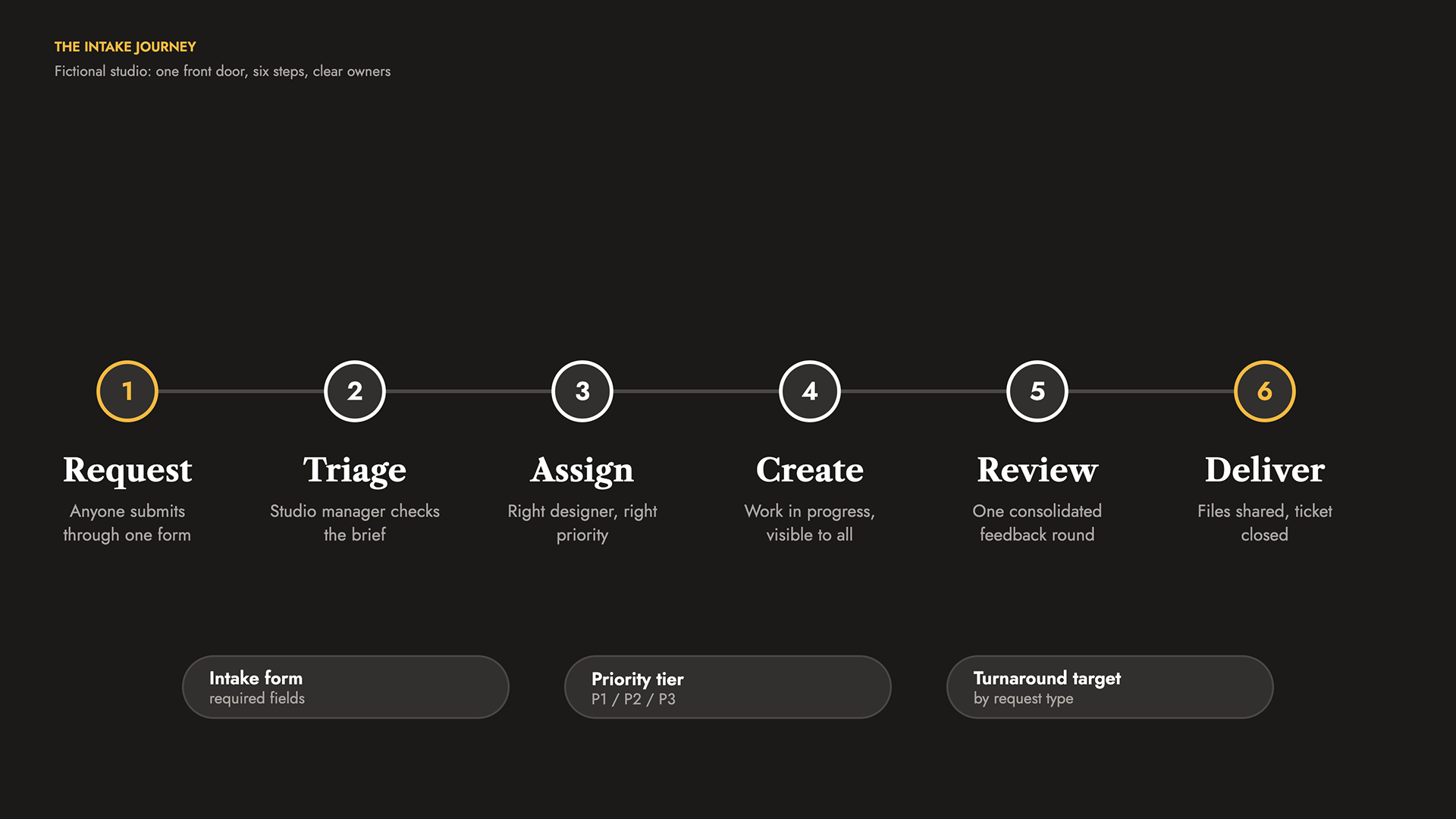
I joined the leadership team of Impact, working with its head of department to build the agency’s operating model. My first task was to review the existing ticketing process and understand how work came in from stakeholders across the business. From there, I helped design the systems the team would run on.
What we built
1. One front door for requests: An intake and ticketing system so every request, from every part of the business, entered the same way and reached the right team.
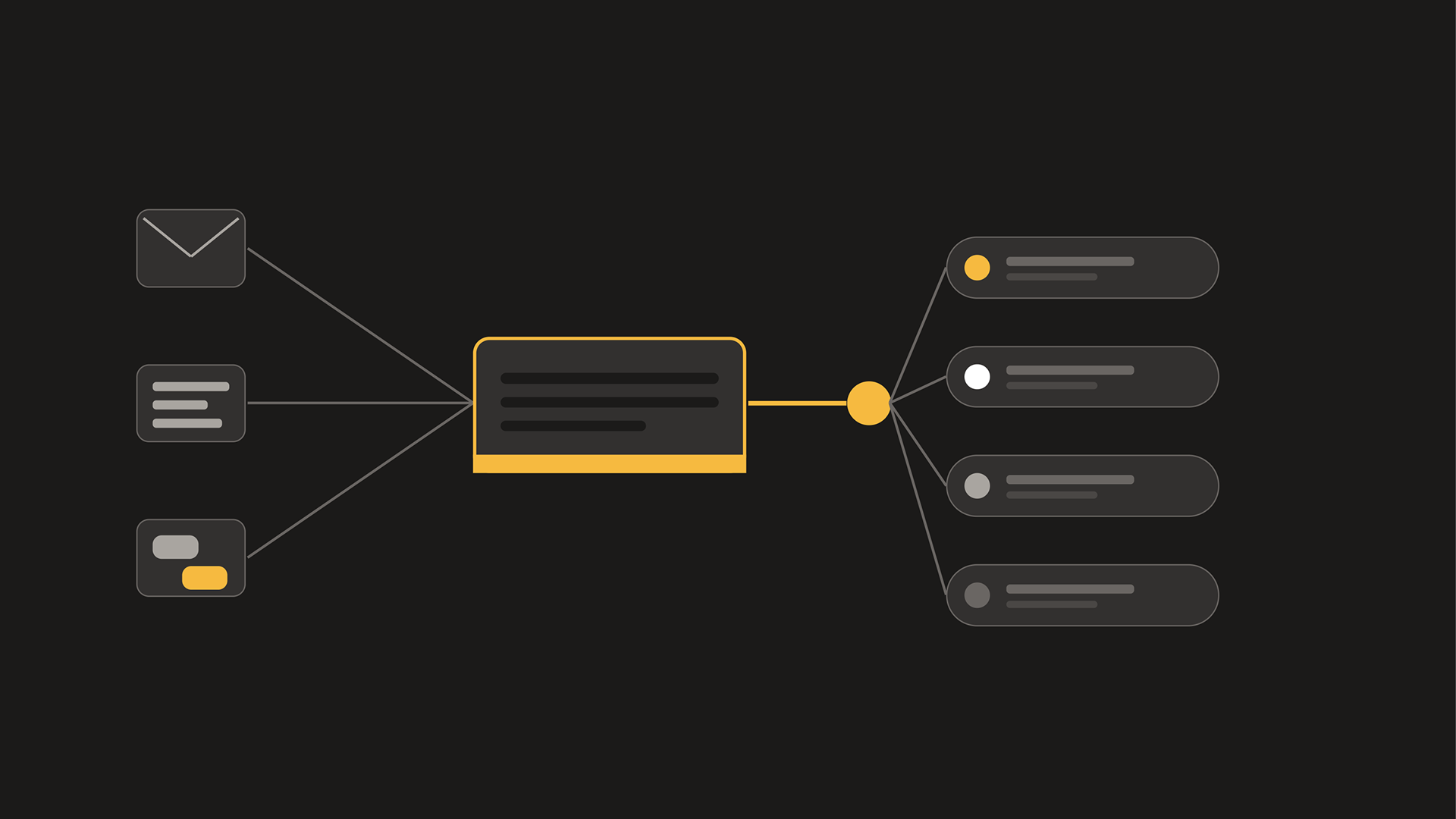
2. 52 custom workflows: Each discipline (brand and design, content and copy, digital and web, events and experiences, press and media, marketing operations) works differently, so we mapped and built 52 workflows around what each team actually delivers. Example: a presentation request form captured the audience, deadline, and content owner, auto-assigned a designer, and set a reminder for the first review within 24 hours.
3. Reporting the business could use: We set up a reporting rhythm (for day, week, month, quarter, and a year) and built the Power BI dashboards behind it. We were selective about what to report, so the numbers answered real questions: how many tickets were coming in and from which business verticals, how much of the work was proactive vs. reactive, and where capacity and turnaround time were under pressure. That gave leaders a clear view of where work was coming from and helped them plan ahead.

4. A home for the agency: With the head of Impact, I helped build an intranet showing the team, who to contact, the tools on offer, voice and tone guidance, brand usage, and how to raise a ticket.

Results
- The agency grew from a few generalists to 58 people across six disciplines.
- Ticket volume grew from 1,306 to 2,292 (+75%) in year one.
- Average turnaround improved from 6 days to 3.5 days, and on-time delivery rose from 72% to 83%.
- 181 intranet pages built from scratch in year one; 62,000+ visits in the first six months.What I’d do differently
I would agree service levels with stakeholders on day one, not after launch, and define what "done" means for each workflow before building it. A ticketing system only works when the people raising requests trust it, so I would also run short training sessions with each business unit before go-live.